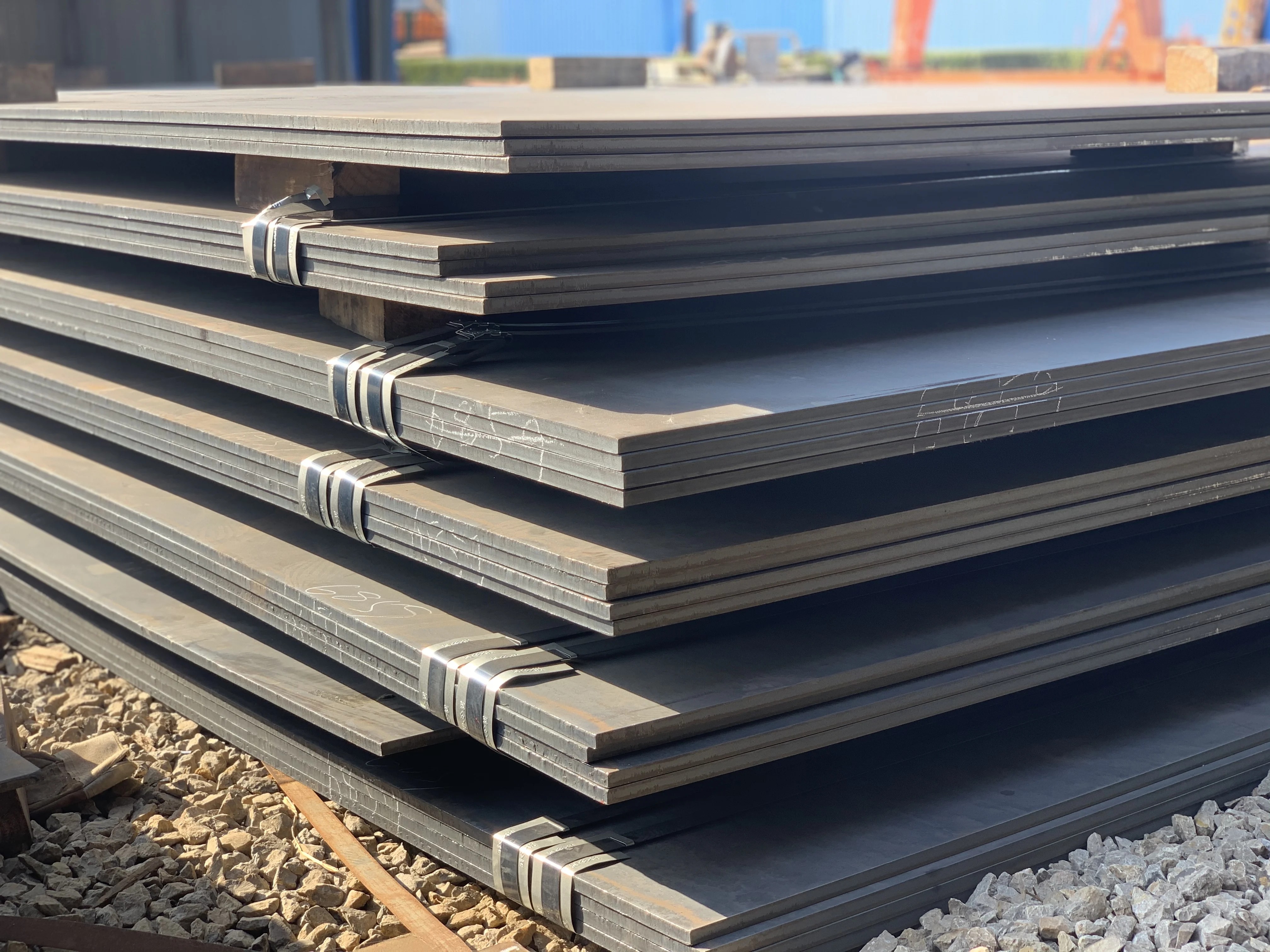
One girder is several purchase lines
A drawing may identify the finished girder but leave the raw plate purchase list implicit. The web, top flange, bottom flange and local reinforcement can have different thicknesses, widths and delivery lengths. Put each blank on a separate schedule line with the member mark and final position. This makes quotation, nesting and receipt checks possible without guessing from a general arrangement drawing.
Use the correct dimensional basis
Distinguish a finished component dimension from the ordered blank dimension. If shop trimming, weld shrinkage allowance or subsequent machining is expected, the approved fabricator should define that allowance. A supplier should not add an arbitrary extra length to every item. Record whether the stated width includes edge machining and whether a splice zone needs a specific cut orientation.
Keep grade and test requirements attached
Write the exact A588 grade and standard edition into the purchase line. Add any project-specific test or inspection requirement before pricing. The structural engineer should confirm whether a different bridge material specification is required; similar weathering appearance is not a substitute for that decision.
Prepare a traceability map
Ask how the heat identifier will survive cutting and how each blank will be linked to the final girder. For a multi-heat assembly, a simple table of member mark, plate position, blank ID and heat number is more useful than a loose stack of certificates. Keep this table aligned with the packing list so receiving staff can locate the right blank.
Before release
Freeze the revision of the member drawing, reconcile every scheduled item to the fabrication bill and obtain approval for any substitution. The related blank inquiry page lists the minimum details to send.