Send the drawing before naming a machine
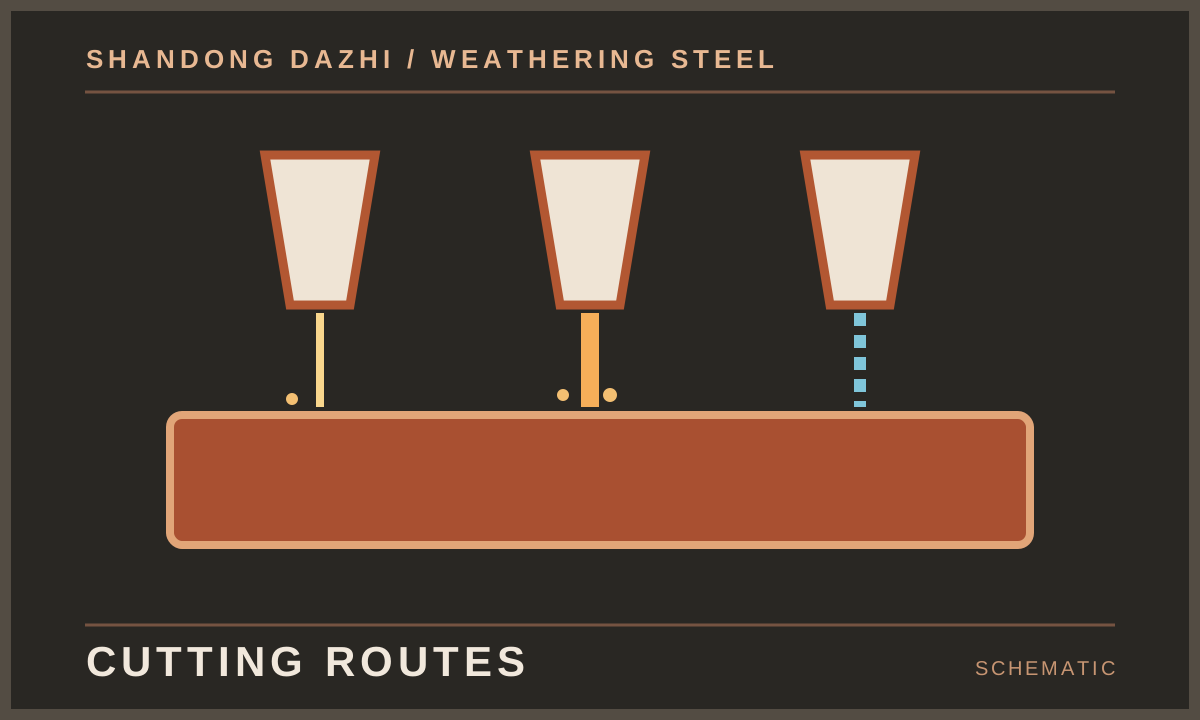
A cut profile can often be made by more than one process. Laser, plasma and waterjet methods have different practical ranges and edge characteristics; actual capability depends on the processor's equipment and the plate supplied. Do not select a method from a photograph or a generic thickness chart alone.
Mark small slots, internal corners, hole sizes and the faces that will remain visible. Also identify whether edges will be welded, machined, ground or left exposed. The required finished edge can matter more than the raw cutting speed.
Questions for each route
| Route | Clarify with the processor |
|---|---|
| Laser | Detail size, plate range, edge appearance and heat effects |
| Plasma | Thickness capacity, kerf and secondary edge finishing |
| Waterjet | Edge taper, surface texture, abrasive cleanup and handling |
Any process may require allowance for kerf, distortion or later finishing. If parts are to be bent, the drawing should locate the bend relative to the cut edge and state its acceptance criteria. For exposed architectural work, a trial piece can resolve appearance questions early.
Write a process-neutral RFQ when appropriate
- Specify material grade, thickness, drawing revision and quantity.
- Mark critical holes, slots, radii and visible edges.
- State required edge condition and any weld preparation.
- Allow the supplier to propose the feasible cutting route and finishing sequence.
See processed plate options and the guide to finished-part tolerances. The approved drawing, not the process label, determines whether the part is acceptable.
This guide is general buying information. The current material standard, project drawing and agreed purchase documents control technical acceptance and supply.