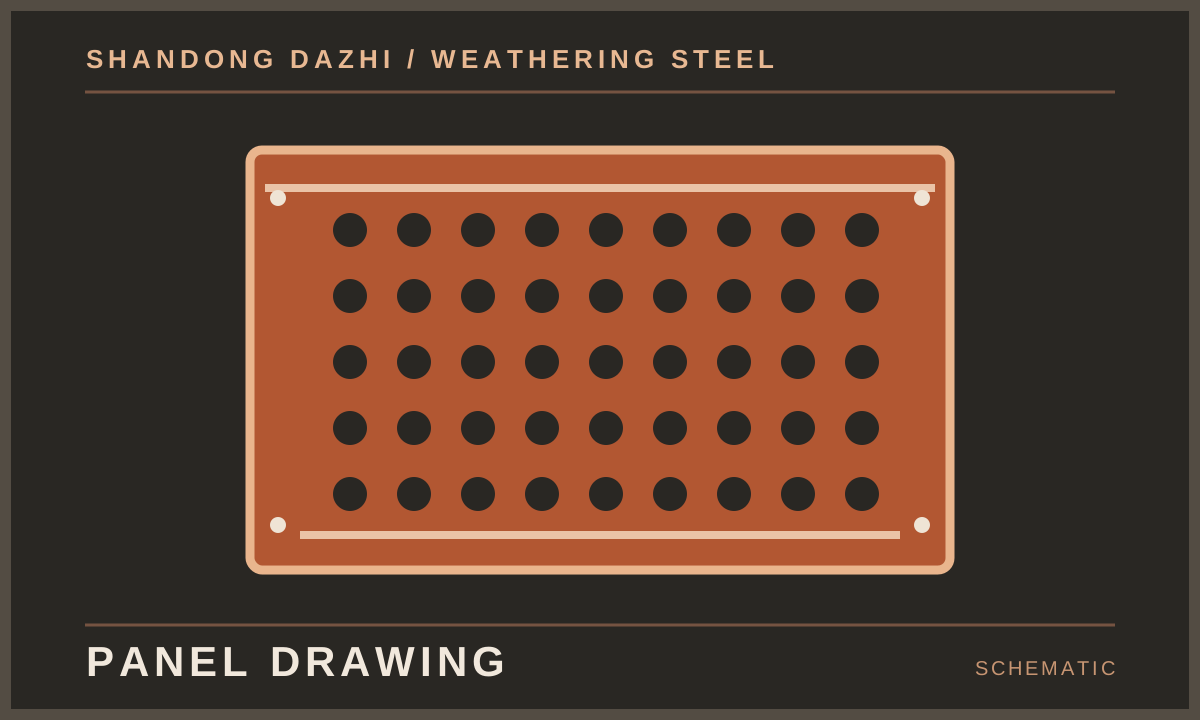
Control the pattern and the solid edges
Start with a finished panel outline and a repeatable pattern definition: hole shape, size, pitch, orientation and start point. Then show the unperforated border. Border width matters where a bracket, fold or fixing hole must remain in solid material.
Open area can be a design target for light, airflow or visibility, but it is not a substitute for a complete hole schedule. The designer must review panel stiffness, safety and wind or other loads for the intended span. A cutting shop needs an approved drawing rather than a visual percentage alone.
Where fabrication questions arise
| Drawing area | Check before release |
|---|---|
| Pattern | Hole geometry, pitch, rotation and edge start/stop rules |
| Ligaments | Material left between cutouts and around corners |
| Border | Solid zones for folds, frames and fasteners |
| Panel joint | Pattern continuation and gap across adjacent units |
| Finish | Visible face, cut-edge treatment and sample approval |
If the panels form a screen, identify sight lines and required opacity from both sides. If they form a facade, include the subframe interface, movement allowance and drainage strategy. The same artwork may need different engineering details in these two uses.
Send a complete fabrication package
- Attach vector geometry and a dimensioned, revision-controlled drawing.
- State grade, thickness, panel quantity and reference numbers.
- Mark fixing holes, folds, protected edges and visible sides.
- Confirm the pattern approval and first-article inspection process.
Related inquiry pages are perforated weathering panels and weathering steel screens. Each quotation should state whether supports and installation hardware are included.
This guide is general buying information. The current material standard, project drawing and agreed purchase documents control technical acceptance and supply.