Define the level of identification the order requires
Material identification and full piece-by-piece traceability are not automatically the same requirement. The project specification should establish what must be retained and demonstrated. Ask the buyer to state the required relationship between the delivered parts, their material batches and the inspection documents.
Build that requirement into the order before processing. It is harder to reconstruct an undocumented link after parts have been separated, mixed or surface-treated.
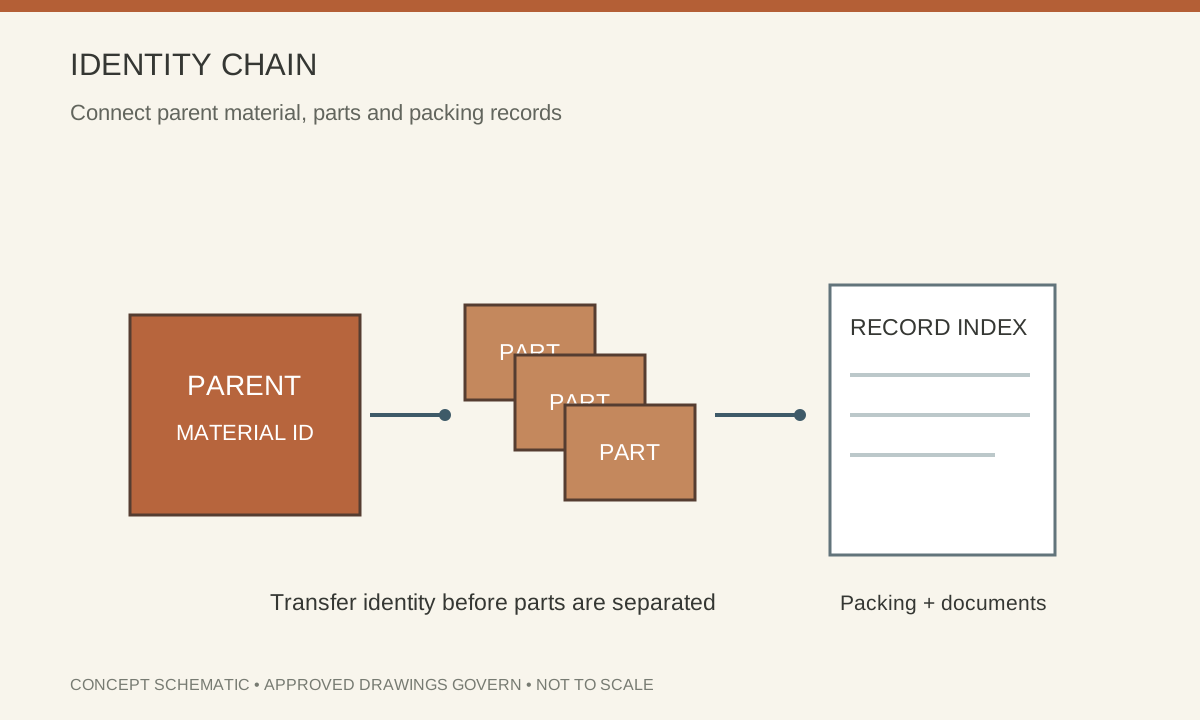
Connect the nesting sheet to the part register
The shop record should distinguish parent material identity from the finished part mark. When a plate is nested into multiple shapes, record the relationship in the system required by the project. Keep repeated part marks from different parent material identifiable to the necessary level.
Specify how marking may be transferred without damaging an appearance-critical face or violating the drawing. Labels, durable marks and location rules need agreement for the actual finishing and packing route. No single marking method suits every project.
| Checkpoint | Information to agree |
|---|---|
| Parent material | Required plate or batch identity |
| Transformation | Nesting/cutting relationship to part marks |
| Marking | Method, position and transfer responsibility |
| Dispatch | Packing list and agreed document index |
Include remnants and changes in the handover logic
A remnant re-entering production needs the relevant identity and material information. A clear offcut shape alone does not establish its grade or heat. Record the controls applied when usable remnants are separated from scrap.
At dispatch, align the packing list, part schedule and required material records. If the customer expects a particular register or certificate index, agree its format early and confirm who supplies it. A pile of unindexed documents can leave the same practical uncertainty as a missing record.
Before releasing the order
- State the identification level in the RFQ.
- Agree transfer controls before cutting.
- Keep remnants within the same required record system.
- Match delivered parts to the agreed document register.
Purchase the identification process your project requires, then retain the evidence that the agreed process was followed.
Review the related product inquiry with the approved drawing and material schedule.
AISC engineering FAQs: general fabrication ↗
General reference for the discussion; the applicable material standard, approved project design and purchase documents govern the order.