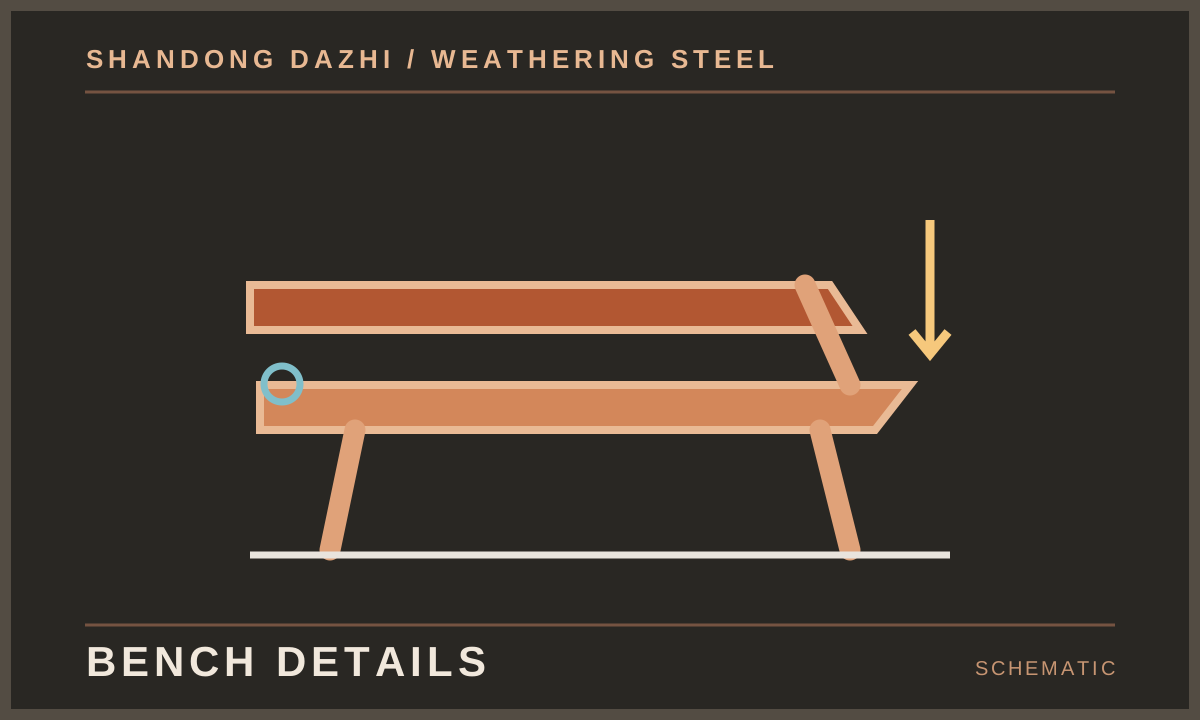
Distinguish contact surfaces from structure
Weathering steel can be used in bench legs or side plates while a separate material forms the seat. It can also be part of a continuous metal body. The project drawing must show which surfaces people touch, the exposed edge treatment and whether a finish or different contact material is required.
Sun-exposed metal can feel very warm, and rain can leave seating surfaces wet. The owner and designer should consider climate, shade, intended users and cleaning. No material description by itself proves comfort, accessibility or compliance with a local public-space requirement.
Details to review in a bench mock-up
| Feature | Question |
|---|---|
| Seat and back | Are dimensions, edges, gaps and contact finishes acceptable? |
| Fasteners | Are heads recessed and components replaceable? |
| Base | Is the anchoring layout coordinated with the footing? |
| Drainage | Can water leave joints and the ground contact zone? |
| Runoff | Will the visible patina mark nearby paving or clothing? |
A small mock-up or finish sample can resolve touch and appearance issues before multiple units are ordered. The sample should represent the real seat material and joint, not just a loose weathering steel coupon.
Prepare a complete procurement scope
- Provide plan, elevation, section and installation drawings.
- State every material in the assembly and who supplies it.
- List edge finish, anchors, spare parts and maintenance access.
- Define sample approval and acceptance records.
The bench product page collects order inputs. For broader site metalwork, visit landscape products.
This guide is general buying information. The current material standard, project drawing and agreed purchase documents control technical acceptance and supply.