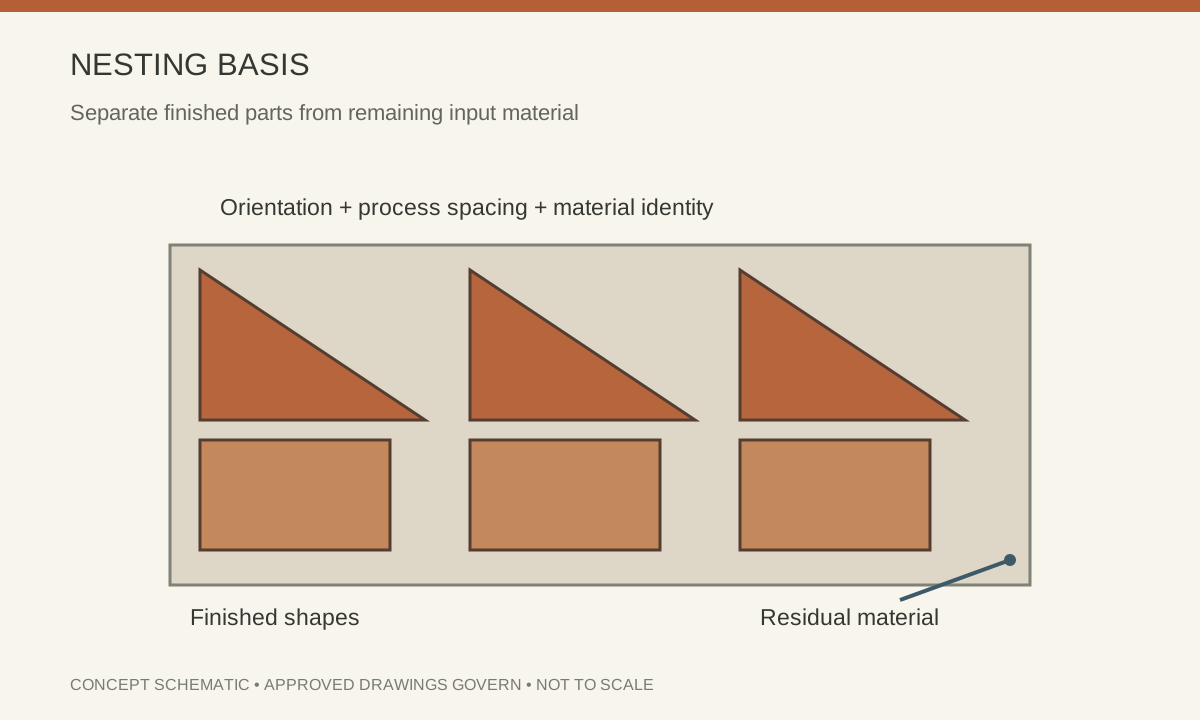
Separate finished-part mass from purchased material
The net area of the required parts does not describe the whole input plate. Nesting leaves process spacing, margins and residual material. Identify whether the offer is based on finished pieces, purchased plate mass or another clearly stated commercial method.
Request the same quantities and drawing revisions from each bidder. Combining repeat parts can change a nesting arrangement, while a late revision can make an earlier material estimate obsolete.
Identify constraints that the nesting layout must preserve
A layout must respect more than visual fit. The material identity, any required rolling orientation, finish-face restrictions, process allowance and the approved part geometry can limit rotation or placement. Mark those requirements in the inquiry so a high nominal yield does not override the design.
Leave the processor appropriate freedom to propose a workable layout within the accepted constraints. If the offer depends on a geometry change or a substituted input size, obtain project approval before treating it as the same scope.
| Checkpoint | Information to agree |
|---|---|
| Quantity basis | Finished pieces and drawing revision |
| Material basis | Input plate or finished-part pricing method |
| Nesting constraints | Orientation, identity, finish and allowances |
| Residual material | Ownership, identification and return costs |
Agree what happens to usable remnants
State whether residual material is retained by the supplier, returned to the buyer or credited under an agreed method. Distinguish usable identified remnants from scrap, and include any cutting, handling or transport associated with returning them.
Avoid comparing a buyer-owned full-plate arrangement with a finished-parts-only price without accounting for the different material ownership. Put the basis in the quotation summary alongside processing, inspection, packing and freight.
Before releasing the order
- Send one consistent part schedule to bidders.
- State orientation and finish restrictions.
- Agree the commercial treatment of remnants.
- Compare processing and inspection on the same basis.
A useful yield discussion explains the assumptions behind the price. It should not replace approved geometry or the required material records.
Review the related product inquiry with the approved drawing and material schedule.
NSBA / AISC guidance on constructability and fabrication ↗
General reference for the discussion; the applicable material standard, approved project design and purchase documents govern the order.