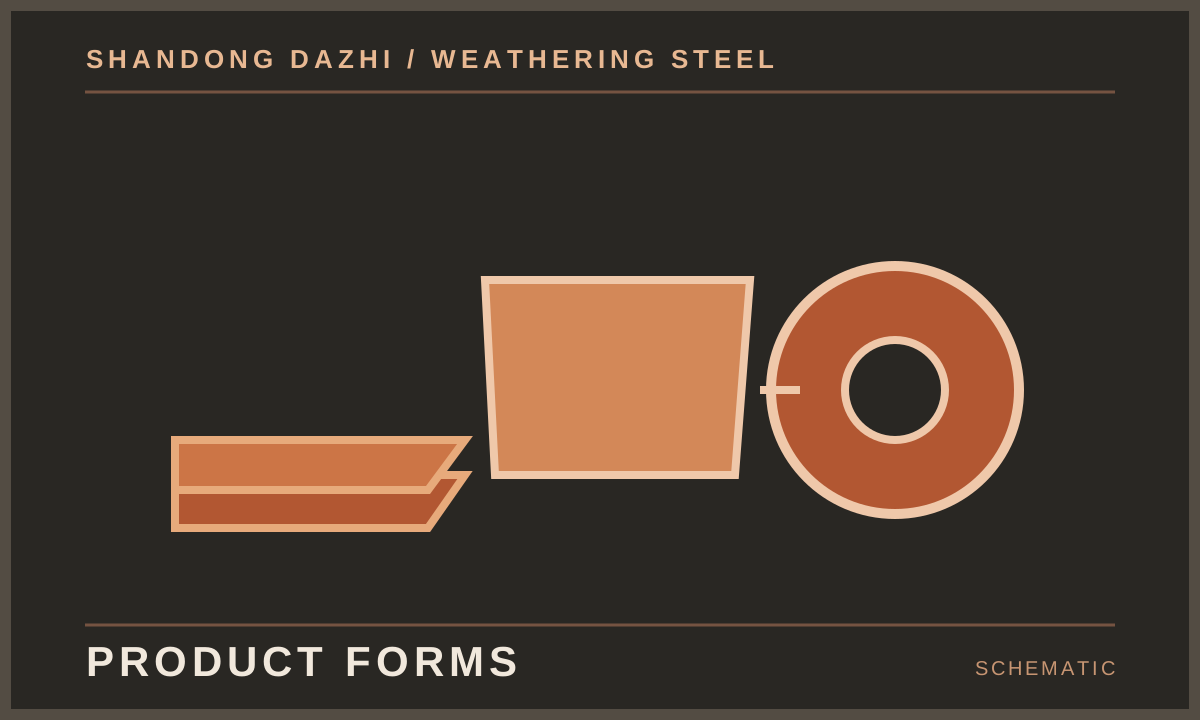
Begin with the part to be made
A structural member cut from heavy material usually starts with a plate specification. Repeating architectural panels may be better described as sheet or strip. Coil becomes useful when the buyer has a receiving line for decoiling, slitting or cut-to-length processing. The familiar word “Corten” does not decide the product form or the applicable standard.
Write the finished part and planned operations first. A facade panel needs visible-face and flatness information; a bridge plate needs the governing grade and project tests; a coil needs handling limits that a rectangular sheet does not have.
Different forms need different schedules
| Form | Core order details |
|---|---|
| Plate | Grade, thickness, width, length, quantity and any cut profiles |
| Sheet or cut length | Grade, gauge or thickness, surface, flatness and edge condition |
| Coil or slit coil | Grade, strip width, coil ID/OD, mass range and receiving-line limits |
Do not assume the same designation applies to every form. Check the scope of the requested product standard, then confirm with the supplier whether the desired form and size can be offered.
Check the hand-off to fabrication
- Identify who will cut, slit, level or form the material.
- Set tolerances on the delivered form and on the finished part separately.
- Agree surface expectations and protective handling before shipment.
- Keep heat and grade identification with every coil or cut batch.
See weathering steel coil, structural plate and architectural sheet. A quotation should confirm the exact material and downstream scope instead of treating form names as interchangeable.
This guide is general buying information. The current material standard, project drawing and agreed purchase documents control technical acceptance and supply.