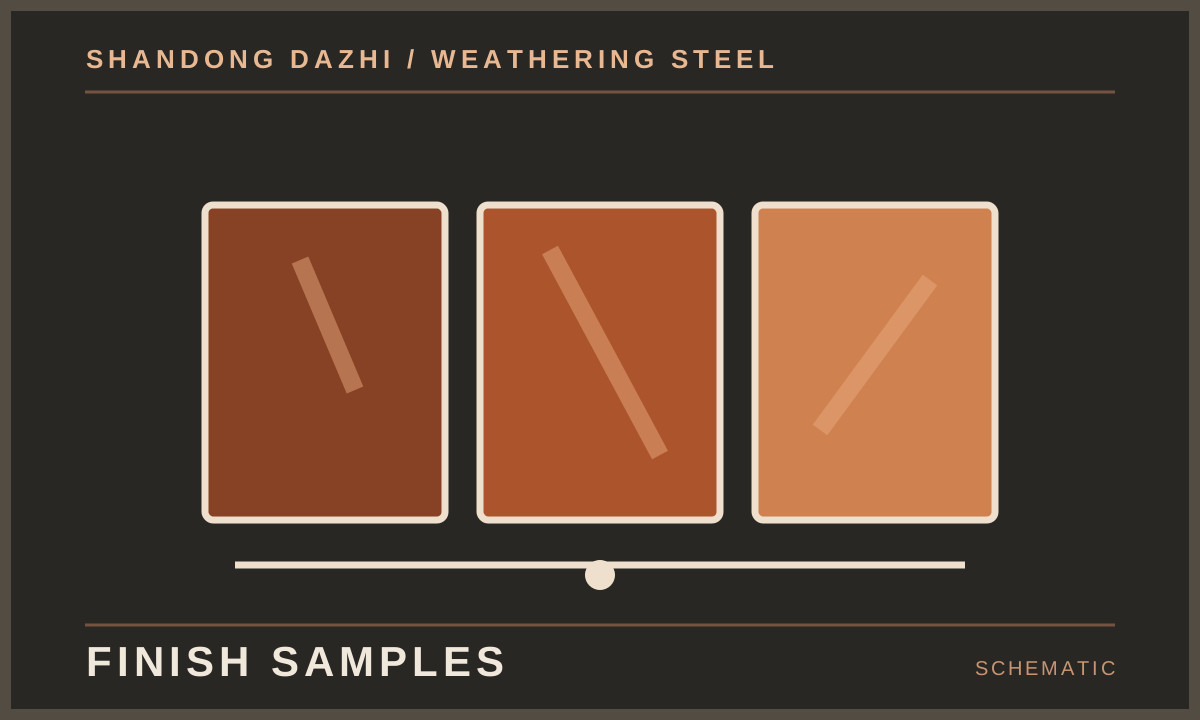
Agree what the sample represents
A photograph is useful for discussing intent, but lighting, screen settings and wetness can change the apparent colour. For visible architectural work, a physical sample can record the agreed initial appearance. Label it with the base material, preparation method, orientation, date and approval reference.
Ask whether the sample demonstrates colour only or also texture, weld appearance, cut edges and protective handling. A small flat coupon may not represent a folded panel with joints and fasteners.
Document acceptable variation
| Approval item | Record |
|---|---|
| Base grade | Standard, grade and condition under the finish |
| Viewing | Dry or wet state, daylight conditions and viewing distance |
| Faces | Which surfaces and cut edges are visible |
| Variation | Range of tone and texture acceptable at delivery |
| Packaging | How contact marks and moisture are controlled in transit |
Inspect a representative mock-up after the same fabrication sequence intended for the project. If panels are welded, bent or perforated, the approval should show those features. Keep the signed sample record with the drawing revision and purchase order.
Plan for change after installation
- Explain that the approved sample describes initial delivery, not a permanent colour.
- Detail water paths and protection of adjacent finishes.
- Set the process for reviewing variations or damaged panels.
- Confirm who approves the sample and who accepts installed work.
See pre-weathered plate and the runoff guide. A finish brief should sit alongside the base steel specification, not replace it.
This guide is general buying information. The current material standard, project drawing and agreed purchase documents control technical acceptance and supply.