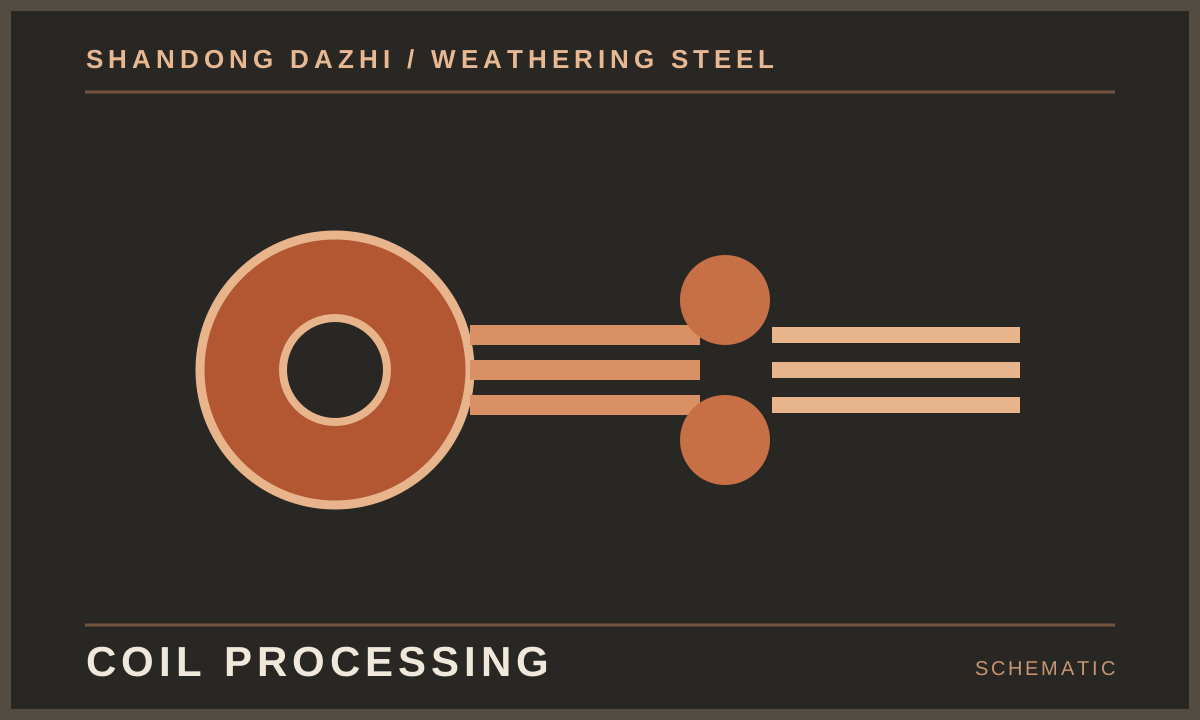
Describe both the incoming coil and the output
The processor needs to know the incoming thickness and width, coil inner and outer diameter, approximate mass and winding condition. If the material will be slit, provide a width schedule for every daughter coil and explain whether trim scrap is included in the yield calculation.
For cut-to-length work, list each blank size, quantity and the expected flatness and squareness of the delivered pieces. “Make it flat” is not an acceptance criterion; set a measurable requirement against the governing product and processing agreement.
Edge and handling decisions
| Processing item | Decision before quoting |
|---|---|
| Slit edge | Burr direction, allowable edge condition and downstream safety needs |
| Leveling | Finished flatness target, blank length and inspection method |
| Packaging | Coil orientation, banding, separators and transport support |
| Identification | Heat and grade traceability after splitting the mother coil |
Some strip will be formed again, while other blanks become visible architectural surfaces. Tell the processor which faces must be protected. Fresh cuts and handling marks can weather differently at first, so sample expectations should be agreed separately from dimensional acceptance.
A useful processing schedule
- List the base grade, standard, thickness and incoming coil limits.
- Provide all slit widths, quantities and delivery form.
- Define edge, camber, flatness and cut-length acceptance.
- State surface protection, traceability and packing needs.
Processing feasibility and lead time depend on the actual line and material. Start with the weathering steel coil inquiry page; for form choice see the plate, sheet or coil guide.
This guide is general buying information. The current material standard, project drawing and agreed purchase documents control technical acceptance and supply.